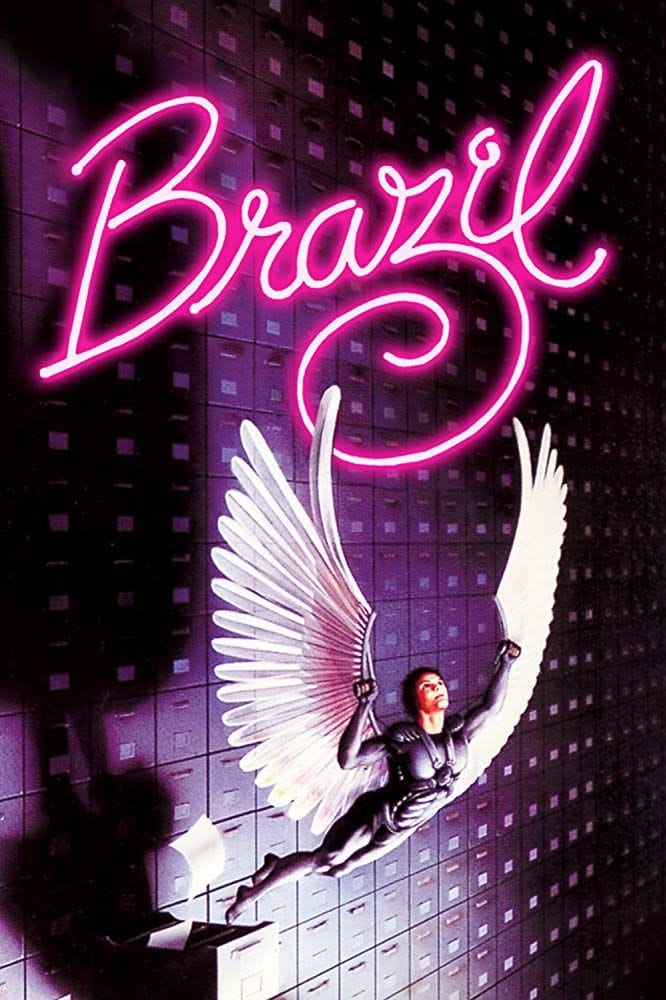

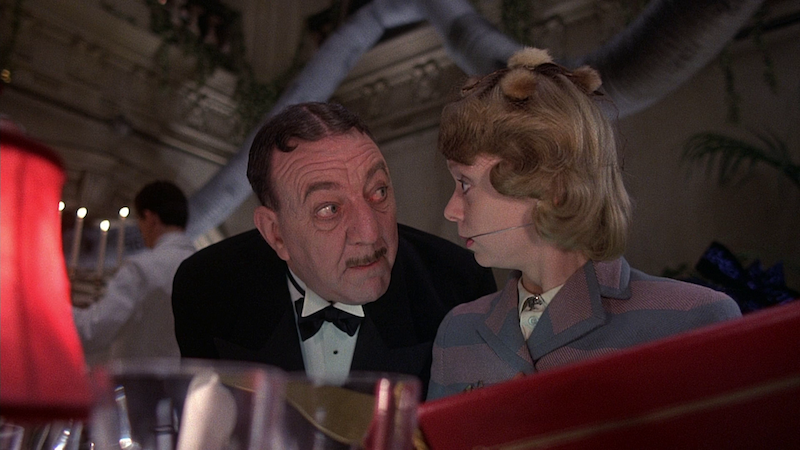
Director - Terry Gilliam
Actors - Jonathan Pryce, Robert De Niro, Ian Holm, Kim Greist
Genre - Sci-Fi
Category - Movies
"Where hearts were entertaining June, we stood beneath an amber moon, and softly murmured someday soon (someday)!"
"Brazil" by Geoff & Maria Muldaur
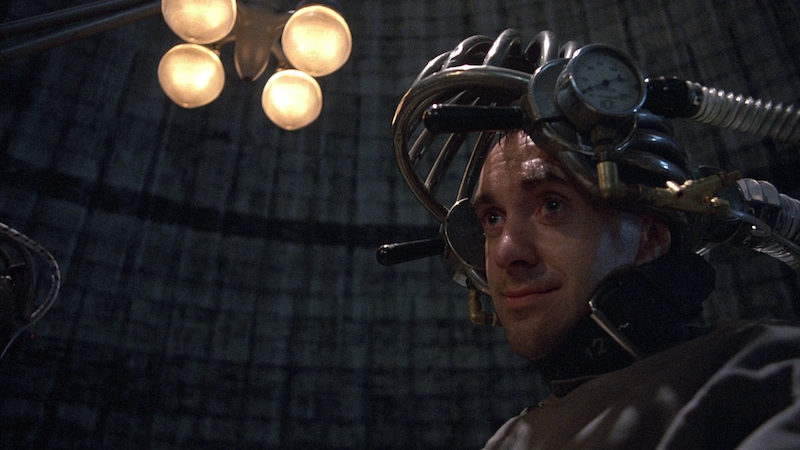
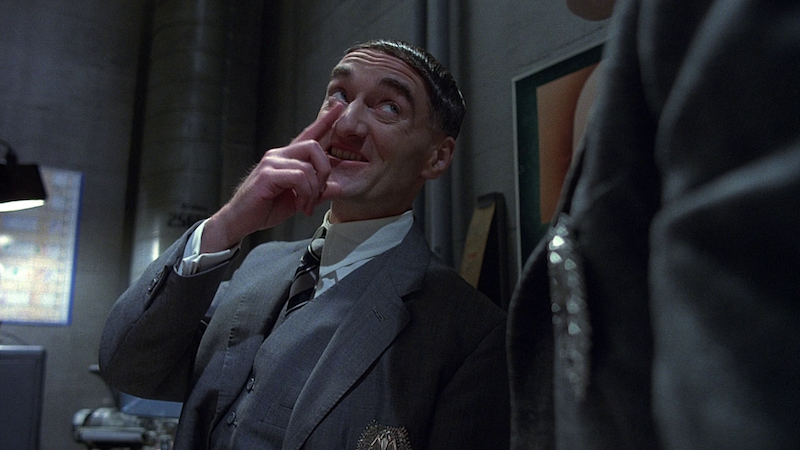
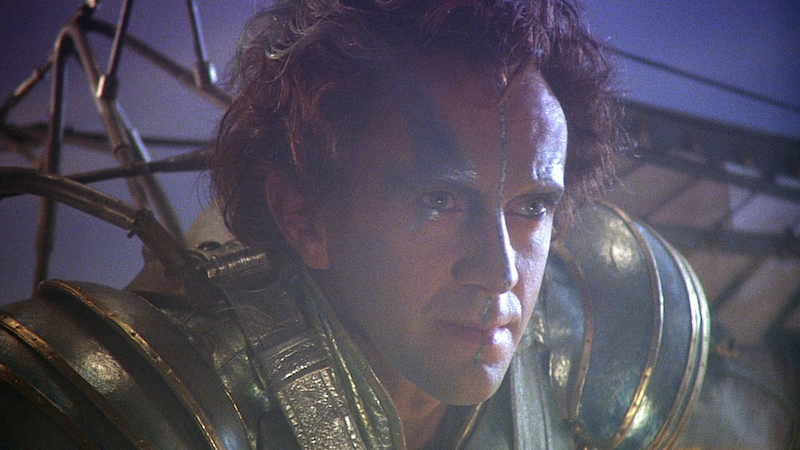
Brazil is a dystopian nightmare in the tradition of 1984 or Fritz Lang’s Metropolis. Terry Gilliam embarks on a stylistic journey that defines the rest of his career, delivering a prophetic view of a not-so-distant future where police brutality, corporate bureaucracy, and threats to "the right to repair" have run utterly amok!
A feast for the eyes, Brazil's lighting, miniatures, and cinematography will leave you with plenty to absorb. It is absurd, but tangible; dreamlike, yet grounded, and dysfunctional, however, totally believable. There is no solid foundation for the viewer to stand on other than the reliable consequences of red tape and the urgency of a man's desire to be free.
I've wondered if Brazil's relevance has increased with the passage of time since the reception in 1985 was mixed. Roger Ebert said it was "difficult to follow" and that the plot is "wash[ed] in elaborate special effects, sensational sets, apocalyptic scenes of destruction, and a general lack of discipline." Universal Pictures executives felt the ending was too depressing, and tasked a second editing team with secretly cutting a feel good version they could retreat to. However, Jonathan Pryce described playing Sam Lowry as a highlight of his career, and Robert De Niro accepted the iconic role of Tuttle after being denied the larger character of Jack Lint because he was so eager to be involved with the project. Regardless of their enthusiasm, the film grossed $5 million under budget, suggesting that it may have simply been before its time.
Geoff and Maria Muldaur's song "Brazil", from their 1968 album Pottery Pie, serves as more than a title track--it is the film's philosophical core, interwoven into every scene with purpose and attitude. Based on an earlier tune, "Aquarela do Brasil" by Ary Barroso in 1939, the Muldaur's shift the meaning from an anthem of Brazil's greatness to a melodramatic ballad that yearns for the idea of Brazil: an exotic escape where love waits around every corner. However, just as freedom eludes Sam Lowry, Brazil eludes Geoff Muldaur; a dream, never to be attained, but cherished anyway for the joy it brings. That is the shared thesis of both the film and the song, and Gilliam uses the comparison to spectacular effect.
Sam Lowry lusts for a life that he's only seen in his fantasies, yet the audience can't help but cheer him on with every step. We have a strong suspicion that he's been doomed from the start, but we want him to win. We want him to get his "Brazil", and we want him to get the girl. Somehow, it feels like his victory could be our victory. His freedom could be our freedom. We want to believe that the mechanisms of societal control can be thwarted and that a fundamental humanity can be achieved. We want liberation.
Then, the movie ends, and we put that part of our brain on a shelf to return to the demands of modern life. After all, we wouldn't want to cause too much trouble would we? Best to simply forget about it. I hear there's a package for you anyway: something for an executive!
)